
The complete guide
The Practical Buyer's Guide To H11 Halogen Headlight Bulbs
When a headlight goes, the night gets smaller
Most people notice a failed headlight the same way. You pull out of a driveway after dark, and the road in front of you looks lopsided. One side is lit, the other side fades into grey. It is unsettling, and it makes judging distance on unlit roads harder than it should be.
A headlight bulb is a consumable part. It does not fail because you did something wrong. The filament inside simply wears down over thousands of hours of heat cycling, and eventually it gives up. The useful thing to know is that it is usually a cheap, quick fix, as long as you buy the right bulb.
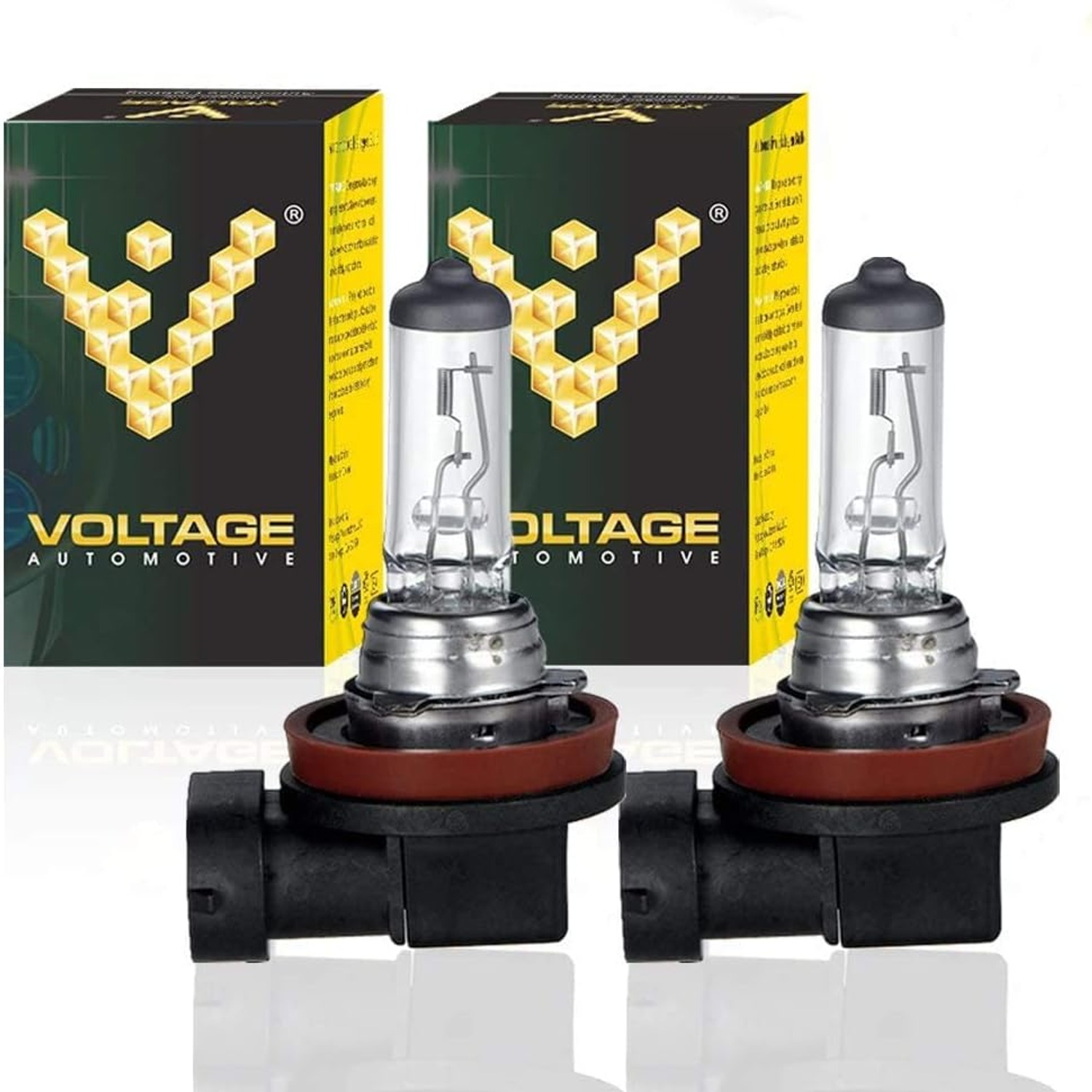
These are H11 halogen headlight bulbs, sold as a pair. Each one is rated at 55 watts, with a light colour of 3800 Kelvin. That is the whole specification, and it is deliberately simple, because a replacement bulb should be simple.
How a halogen bulb actually works
Inside the glass capsule there is a tungsten filament and a small amount of halogen gas. Current heats the filament until it glows. The halogen gas does something clever, it picks up tungsten that boils off the hot filament and redeposits it, which slows the blackening you would otherwise see on the inside of the glass.
That design is why halogen bulbs have stuck around for decades. They are cheap to make, they light instantly, they work with standard vehicle wiring and they produce a steady, even beam that headlight housings were built around. A halogen bulb also runs very hot, which matters when you go to change one. Give it time to cool.
The quartz glass is another reason to handle the bulb carefully. Quartz takes far more heat than ordinary glass, but it is sensitive to contamination. Fingerprints left on the surface create a spot that heats differently to the glass around it. Hold the bulb by the plastic base and you avoid the problem entirely. If you slip, rubbing alcohol on a lint free cloth sorts it out before you switch the lights on.
The H11 fitting, and why the code matters
Headlight bulbs are standardised by fitting, not by vehicle. H11, H7, H4, 9005 and the rest all describe the shape of the base, the position of the filament and the layout of the electrical contacts. A bulb with the wrong code either will not go in, or will go in and sit with the filament in the wrong place, which throws the beam pattern off.
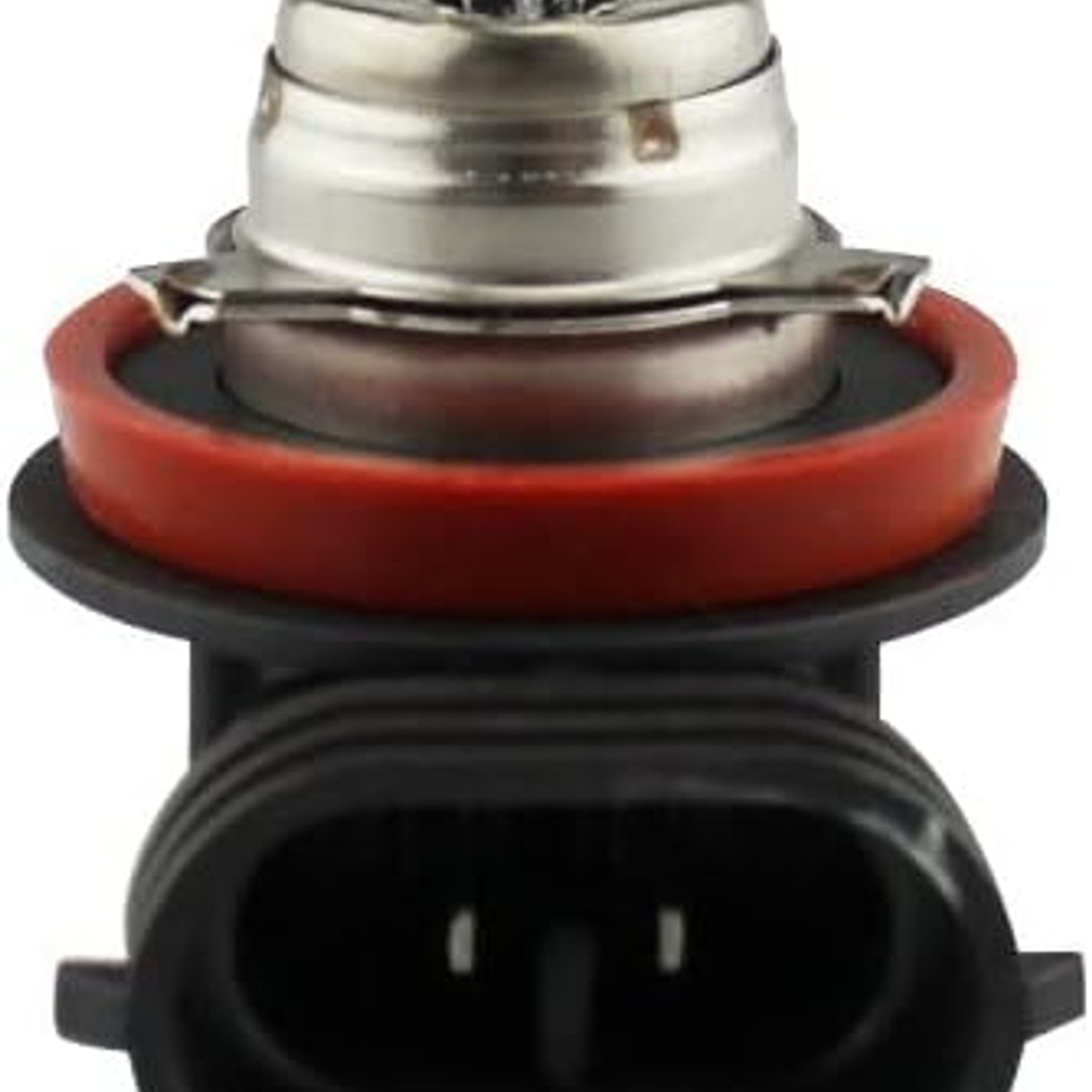
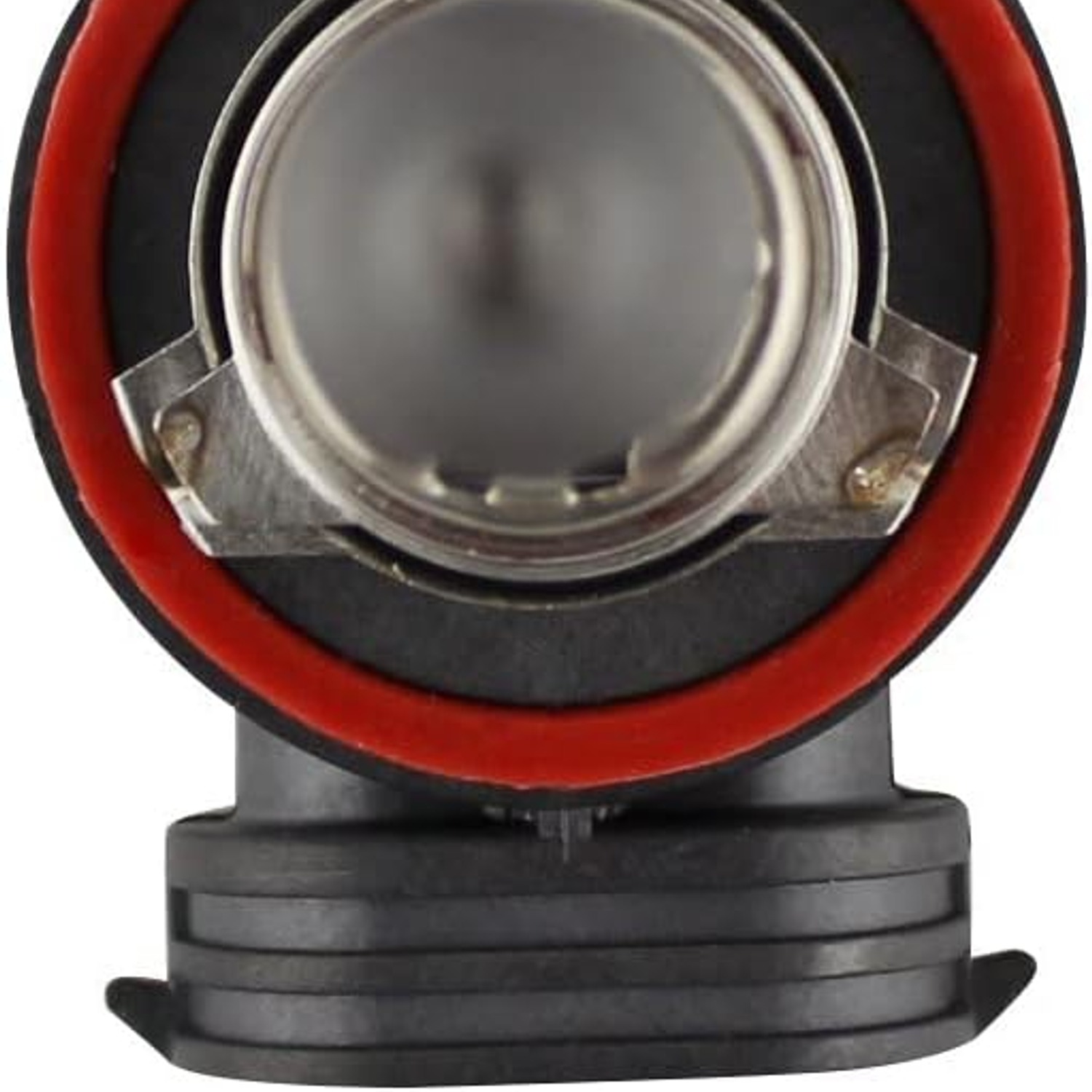
H11 is a single filament bulb with a flanged base and a three pin connector moulded into it. Vehicles use it widely for low beam and for fog lights, sometimes both. But that is a general pattern, not a promise about your car.
So here is the step we would ask you to take before ordering. Open the owner manual and look up the headlight bulb type, or pop the old bulb out and read the code stamped into the base. If it says H11, this pair is a direct replacement. If it says something else, this is not the bulb for the job and we would rather you found that out before the box arrives than after.
We list fitment by fitting type only. We do not publish vehicle lists, because a single model year can run different bulbs depending on trim and headlight type. The code on your old bulb is always more reliable than a lookup table.
Why buying a pair is the sensible move
It is tempting to buy a single bulb when only one has failed. In practice that is usually a false economy.
Both bulbs in a car have been running the same hours, through the same heat cycles, on the same electrical system. When one filament goes, the other is typically well into its own decline. Replace just one, and the car now has a bright new bulb on one side and a tired, slightly dimmer one on the other. You see it in the beam pattern on a wall, and you often feel it on a dark road.
Fitting both at once keeps the light even and the colour consistent. It also means one trip under the bonnet instead of two. That is why these are supplied as a pair, and it is the approach we would suggest to anyone looking for the best h11 halogen headlight bulbs for a straightforward refresh.
If you prefer, you can fit one now and keep the second as a spare in the glovebox. Plenty of drivers do exactly that, particularly if they cover long distances at night. Just store it in the packaging so the glass stays clean and protected.
What 3800 Kelvin looks like on the road
Colour temperature confuses a lot of buyers because the numbers run opposite to intuition. Lower Kelvin values are warmer and more yellow. Higher values are cooler and more blue.
At 3800K, this bulb sits in warm white territory. It looks much like the light most drivers already associate with halogen headlights. Road signs reflect the way you expect, painted lines stay easy to read, and there is none of the harsh blue cast some drivers dislike.
If you were hoping for a stark blue white look, this is not that bulb. If you want your headlights to look normal and familiar, a warm white halogen bulb does exactly that job.
Fitting it without drama
Every car is a little different, but the sequence is broadly the same.
Switch the headlights off and let everything cool. Open the bonnet and find the back of the headlight housing. There is usually a round rubber or plastic cover to remove. Unplug the connector from the bulb, then release the bulb by twisting it or unclipping a wire retainer, depending on the housing design.
Take the new bulb out of its packaging by the base. Line up the flange with the slot in the housing, seat it fully, lock it in place, then reconnect the plug and refit the cover. Do the other side the same way.
Before you close the bonnet, turn the lights on and check both sides. A quick look at a garage door from a few metres back will tell you whether the two beams sit level. A like for like swap does not normally disturb the aim, since the filament position is standardised, but it is a five second check worth doing.
Some vehicles make life harder by putting the headlight behind a battery, an air box or a wheel arch liner. If that is yours, allow a bit more time and have a basic socket set within reach.
Looking after them
There is not much maintenance to a headlight bulb, but a few habits help.
Keep the glass clean and untouched during fitting. Make sure the rubber dust cover goes back on properly, because moisture in the housing is hard on bulbs and on reflectors. If a bulb fails unusually early, it is worth having the charging system checked, since high voltage shortens bulb life quickly.
Store any spare bulb in its box, somewhere dry and where it will not get knocked about. A loose bulb rolling around a boot is a bulb that will be broken when you need it.
The short version
If your vehicle runs an H11 bulb, this pair is a plain, direct replacement. Two bulbs, 55 watts each, 3800 Kelvin warm white light. No adapters, no wiring changes, no decoder.
Check the fitting code on your old bulb or in the owner manual before ordering. Replace both sides together for even light. Handle the glass by the base only, and let a hot bulb cool before touching it.
Get those few things right and you are back to a full, matched beam in under half an hour.