
The complete guide
The Practical Buyer's Guide to H7 LED Headlight Bulbs
The problem this set solves
You open the hood, look at the headlight housing, and the light coming out of it is yellow and tired. Maybe one side is dimmer than the other. Maybe both bulbs have been in there since the vehicle was new. For a project car, a track car or a display build, that look drags everything else down, and nobody wants to spend a weekend on paint and wheels only to have the front end glow a dull amber.
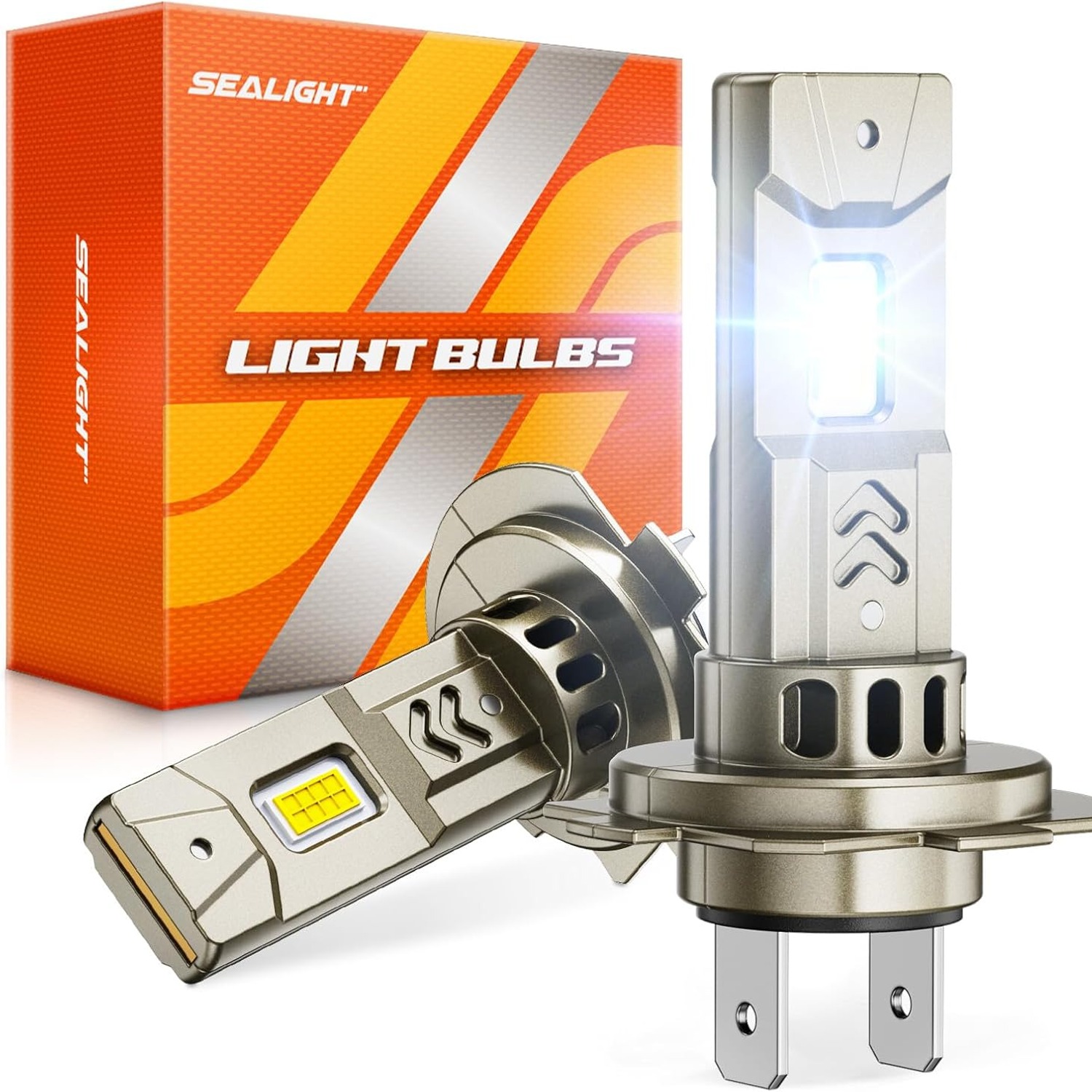
That is where a pair of H7 LED headlight bulbs comes in. This set gives you two bulbs with the H7 fitting and a 6500K colour, which is a cool, clean white rather than the warm yellow of a filament bulb. Both bulbs are in the box, so you change the pair and the front of the vehicle matches.
Before going any further, the important part. In Canada, fitting LED bulbs into headlights that were built around halogen bulbs is generally not permitted on public roads. This set is sold for off-road, show and private property use. If your vehicle is a road car with halogen headlight housings, this is not the part for it.
What an LED conversion bulb actually is
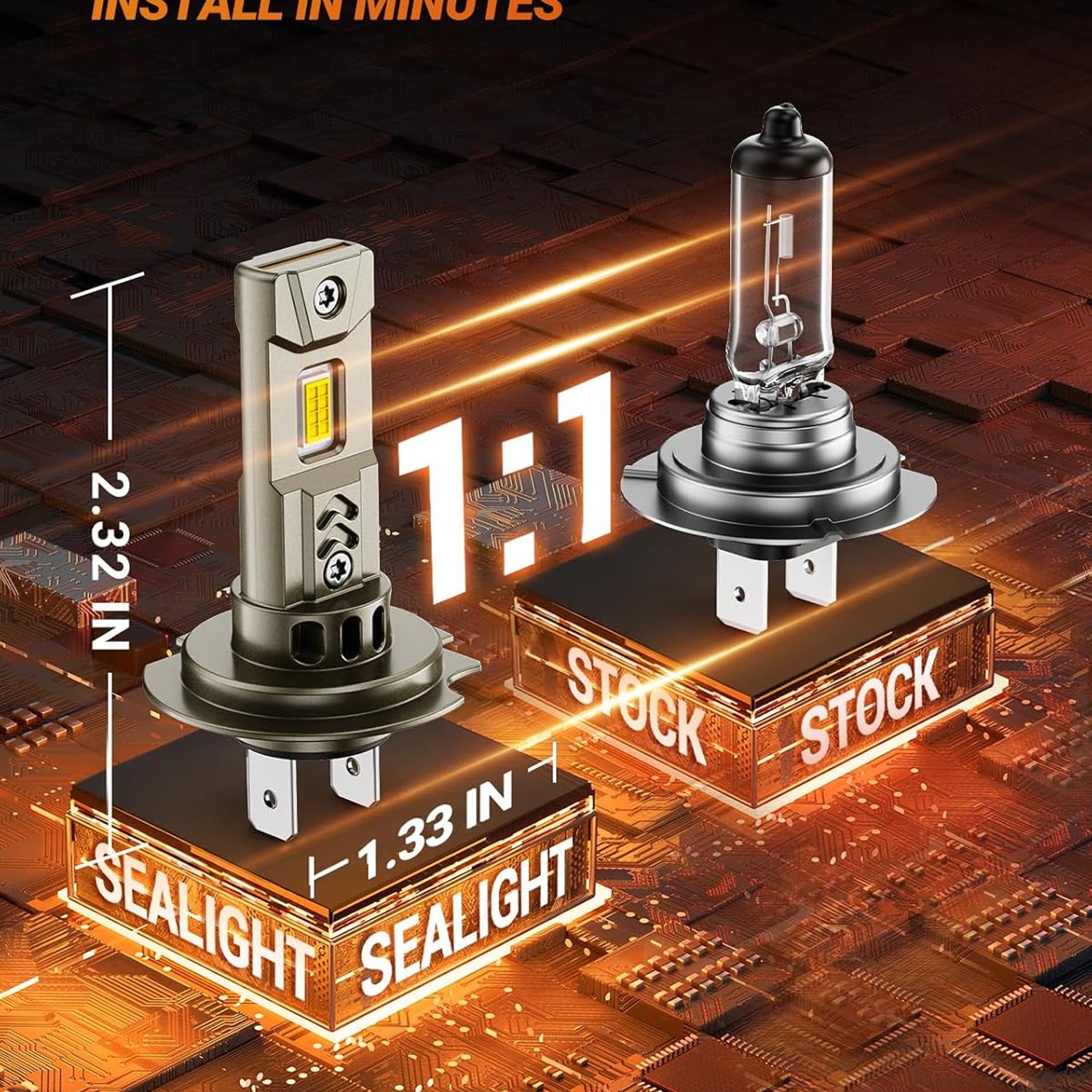
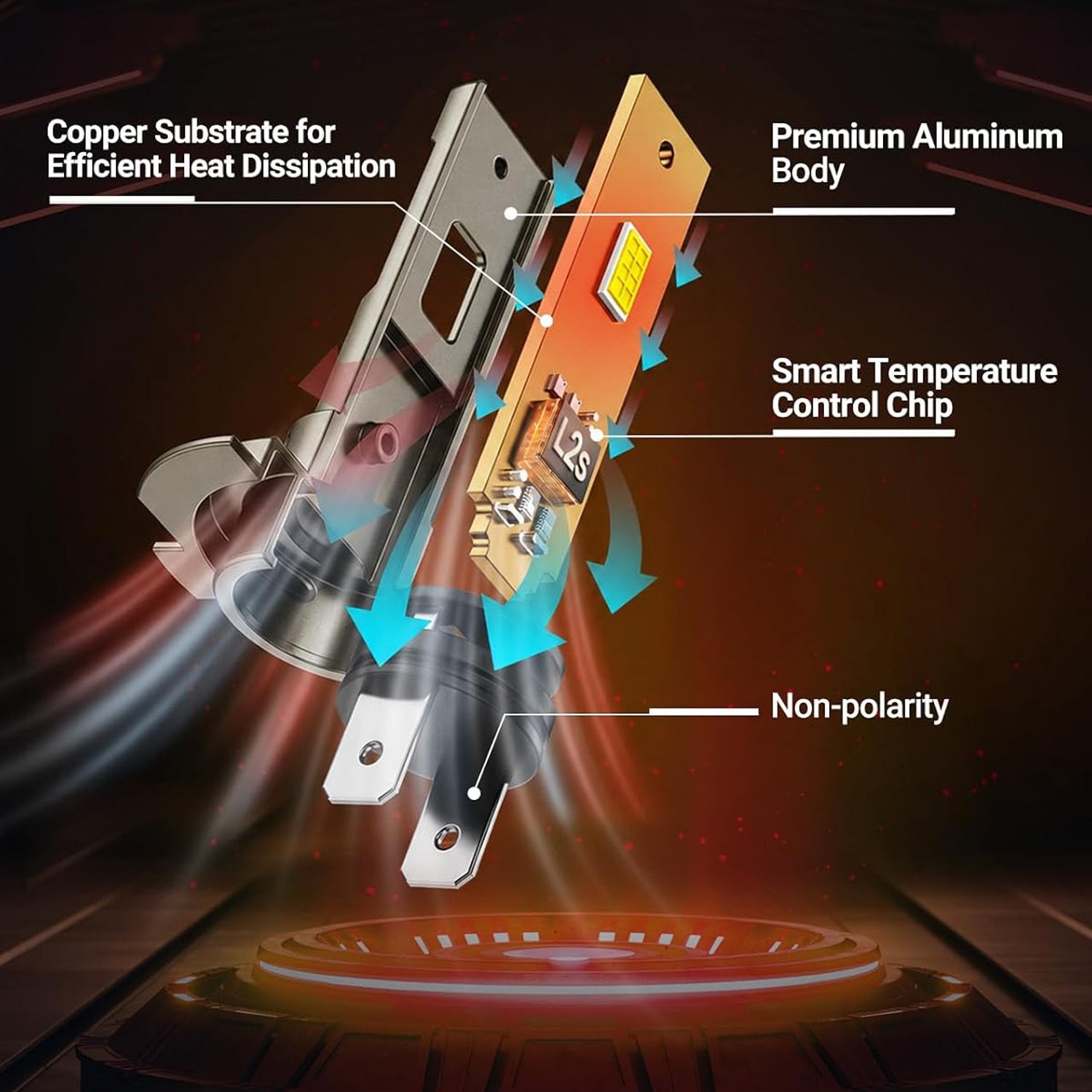
A conversion bulb is a drop-in shaped part. Instead of a glass envelope with a filament inside, you get LED emitters mounted on a body that copies the shape and mounting of the original bulb, plus a small driver to run them. The idea is that the bulb goes into the same socket the old one came out of.
The H7 fitting is one of the most widely used single-bulb fittings around. Depending on the vehicle it can serve the low beam, the high beam or a fog lamp. That is why the fitting code matters more than anything else when you shop. The fitting is the handshake between the bulb and the housing, and if the codes do not match, nothing else about the bulb matters.
The other half of the spec here is the colour temperature. At 6500K you are near the cool white end of the scale. Lower Kelvin numbers look warm and yellowish, higher numbers lean towards blue. Halogen bulbs sit well below this figure, which is exactly why a 6500K led bulb looks so different sitting next to one.
Worth saying clearly: colour temperature describes tone, not quantity. A high Kelvin number does not by itself say anything about how much light a bulb produces. No output figures are published for this set, so we do not quote any.
Who this suits
Think about where the vehicle lives. Off-road vehicles that work on private land, track cars that only see closed circuits, show builds that spend most of their life on a stand, and project cars sitting in a garage waiting for the next stage. Those are the settings this bulb is made for.
It also suits anyone doing a cosmetic refresh on a display vehicle. A white led headlight bulb reads modern in photos and under event lighting in a way that an old halogen simply does not. If the car is going to be photographed, the front lighting shows up in every shot.
It does not suit a daily driver with halogen housings that goes out on public roads. And it does not suit anyone hoping for published output or lifespan numbers, since none are given here.
How to choose the right bulb
Start with the fitting, every single time. Look at the bulb that is in the car now. Most bulbs have the fitting code moulded or printed on the base, and the cap on the back of the housing often names it too. Your owner manual is the third place to look. If all three say H7, this is the right fitting type.
Then check the physical space. An LED conversion bulb has a body behind the emitter where the driver and heat management sit, and that body needs somewhere to go. Some housings have a deep dust cap with plenty of room. Others are tight, and you may need an extended cap or a different design. Pull the old bulb out and have a look at what is behind it before you commit.
Next, think about your vehicle's electrical system. This is where a lot of people get caught out. Many modern vehicles watch the lighting circuit and expect the behaviour of a filament. Swap in an LED and the system can read the change as a fault, which shows up as a bulb warning on the dash or as flicker. A CANbus decoder solves this on most vehicles. It is not included with this pack, so if your vehicle is one of the fussy ones, source one separately.
Finally, buy in pairs. It is tempting to change one side only, especially if just one bulb has failed. Resist it. Mixing a 6500K LED with an old halogen gives you two clearly different colours, and the mismatch is obvious from thirty feet away. This set comes as a pair of h7 bulbs for exactly that reason.
Fitting them without drama
Work with the engine off and the housing cool. LEDs do not get as hot as filament bulbs, but the housing itself and the old bulb can hold heat for a while after use.
Access varies a lot. On some vehicles you reach straight in behind the headlight and turn a cap. On others you need to move an air box, a washer bottle or part of a wheel liner. Spend a minute working out your route before you start pulling things, and take a photo of anything you unclip so reassembly is easy.
Handle the new bulb by the base. Keep fingers off the emitter faces, both for cleanliness and because they are the working part. Seat the bulb the same way the old one sat, lock it in place, and plug the connector on firmly until it clicks.
Then test before you put everything back together. Switch the lights on, check both sides come up, and look for any warning on the dash. If one side does not light, the usual cause is a connector that is not fully home. If you get a warning or a flicker, that is the point where a decoder enters the conversation.
Keeping them in good shape
Most of the care for any h7 led conversion kit is about keeping water out and connections clean. Refit the dust cap and any seal properly after you change a bulb, because a housing that lets moisture in will cause problems no bulb can solve. If the housing already has condensation inside, deal with that first.
When you handle the bulbs, wipe them with a dry, lint-free cloth only, and only when they are cool and out of the housing. Keep solvents, polish and water away from the driver body and the connector. Those parts are not meant to be washed.
Check the connector now and then, especially on a vehicle that works outdoors. Corroded or loose pins cause flicker and intermittent faults that look like a bulb problem but are really a connection problem. Store any spare bulbs in their packaging somewhere dry rather than loose in a toolbox.
The short version
This is a pack of two H7 LED headlight bulbs at 6500K, supplied new as a matched pair. The fitting is H7 and the light source is LED. That is the full set of published facts, and we are not going to pad it with numbers we do not have.
Confirm your housing takes H7 before ordering. Check there is room behind the bulb for the LED body. Expect that some vehicles will need a CANbus decoder, which is not in this pack. And be clear about where it is going, because in Canada, putting LED bulbs into headlights designed for halogen bulbs is generally not permitted on public roads. This set is for off-road, show and private property use.
Get those four things right and it is a simple job with a clean, cool-white result.