
The complete guide
H11 LED Headlight Bulbs: A Practical Buyer's Guide
The problem this set is meant to solve
Most people come looking for H11 LED headlight bulbs for one of two reasons. Either they are building something that does not live on public roads, like a trail truck or a show car, and they want the modern white look. Or they are chasing a specific aesthetic for a display vehicle and the warm yellow glow of a halogen bulb does not match the rest of the build.
That is the honest framing for this product, and it is worth stating clearly before anything else. This is an LED conversion bulb. In Canada, fitting LED bulbs into headlight housings that were designed around halogen bulbs is generally not permitted on public roads. So we sell this pair for off-road, show and private property use. If you are looking for something to run on your daily commuter, this is not it, and we would rather you know that now.
With that settled, the rest of this guide is about what the set actually is, how it behaves once fitted, and how to decide whether it suits your project.
What you are actually getting
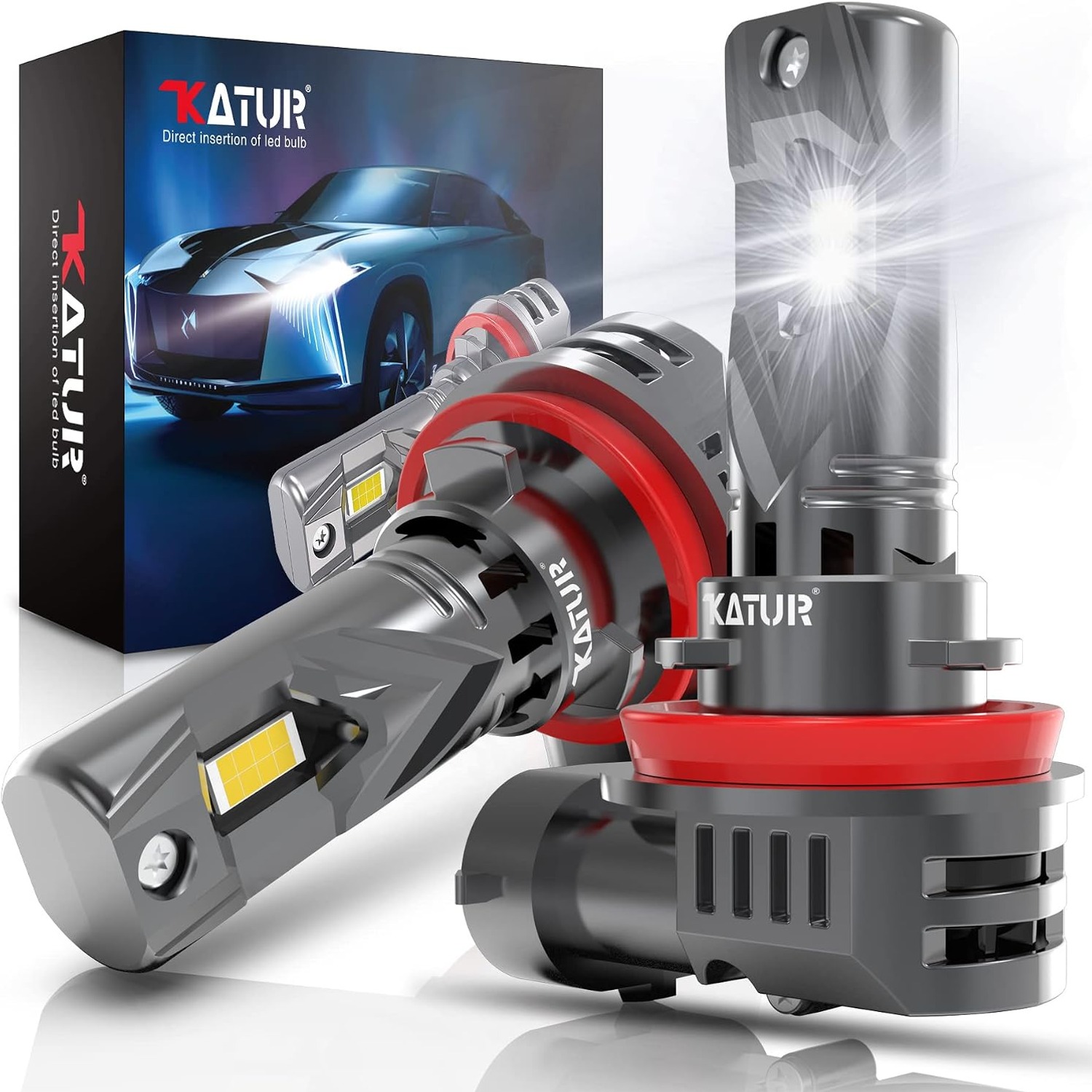
The pack contains two bulbs. Both use the H11 fitting, both run on a 12 volt supply, and both produce light at a colour temperature of 6500 Kelvin. The cooling design is fanless.
That short list covers the facts, and it is deliberately short. You will notice we are not quoting output numbers, lifespan hours or brightness comparisons.
Understanding 6500 Kelvin
Colour temperature describes the tone of the light, not how much of it there is. Lower numbers look warm and yellow. Higher numbers look cool and white. At 6500K you are at the crisp white end of the scale, which is the tone most people picture when they think of a modern LED.
For a show build, this matters a lot. A 6500K bulb pairs visually with white accent lighting, white interior strips and the general look of a contemporary vehicle. Against older halogen lighting it looks obviously different, which is usually the point. If you are matching other lighting on the vehicle, note the colour temperature of those units and see whether 6500K sits alongside them or clashes.
Why fanless matters
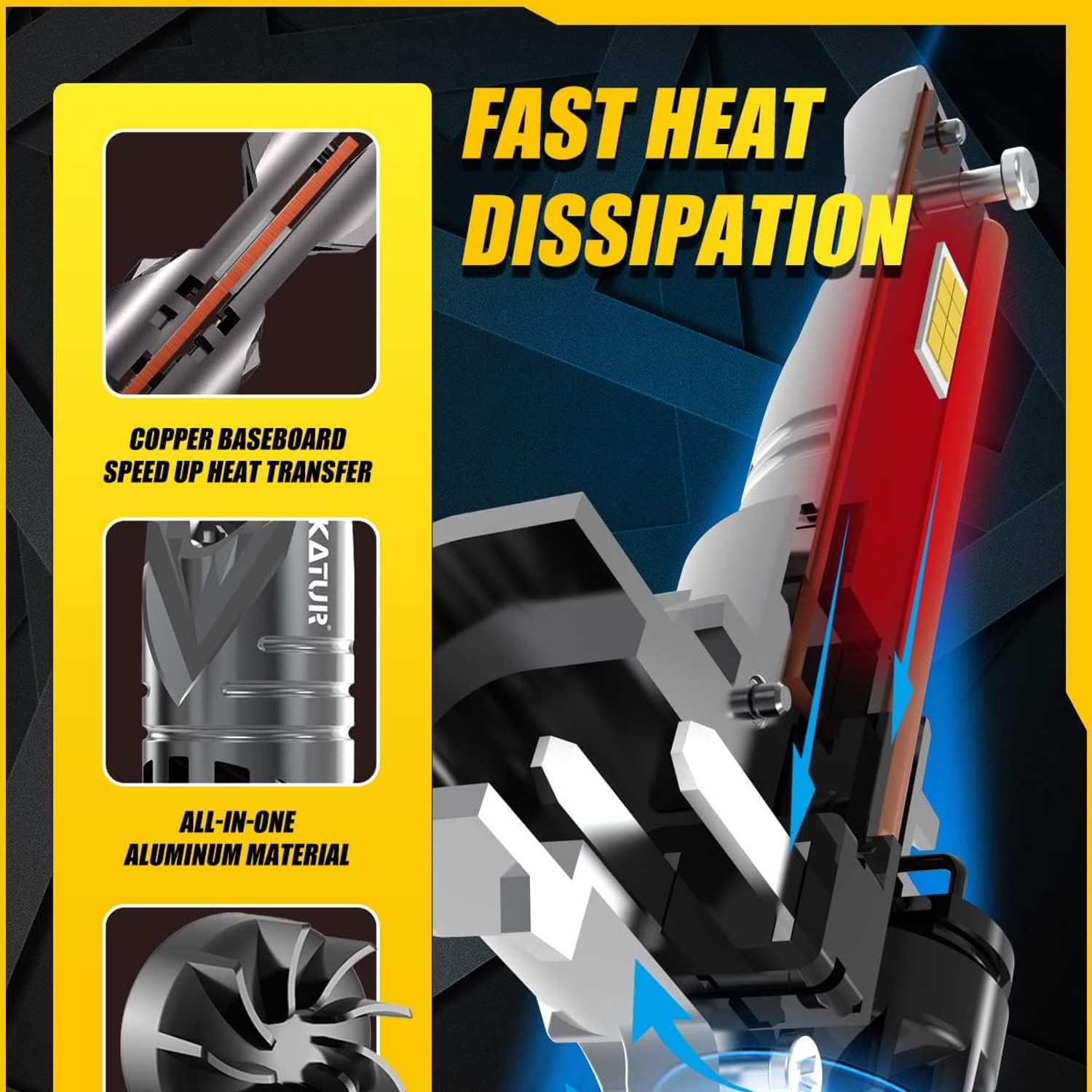
There are two broad approaches to cooling an LED headlight bulb. One uses a tiny fan in the base to move air across the heat sink. The other skips the fan and relies on the heat sink design alone. This set takes the second route.
The practical difference most people notice is sound. A fan can produce an audible whirr, and in a quiet garage or at a static display with the engine off, that sound carries. No fan means no fan noise. There is also the simple matter of moving parts. A fanless bulb does not have a small motor spinning away inside it.
Fanless bulbs do need room to breathe. Heat has to go somewhere, and the heat sink needs to sit where air can reach it. When you fit them, make a note of how much space is behind the housing and whether anything is pressed tight against the back of the bulb.
Electrical quirks worth knowing about
LED bulbs draw current differently than the halogen bulbs many vehicles were wired to expect. Some vehicles run a monitoring circuit that watches the bulb circuit and reports a problem when the draw changes. The result can be a bulb warning on the dash, or flicker in the light itself.
This is not a fault in the bulb. It is the vehicle reading a change it was not built to expect. Whether it happens depends entirely on your vehicle, and it is not something anyone can reliably predict from a product page.
The usual fix is a CANbus decoder, a small inline module that sits between the vehicle wiring and the bulb. A decoder is not included with this set. If you already know your vehicle complains when bulbs are changed, buy one at the same time and save yourself a second trip to the garage.
Who this suits
Think about the vehicle rather than the bulb. A trail rig that lives on private land, a project car that gets trailered to shows, a yard machine, a display build in a workshop: these are the settings where an H11 LED conversion bulb makes sense. The owner usually wants a consistent white look across the vehicle and does not mind doing a little fitting work.
It does not suit someone who wants a drop-in upgrade for a road vehicle with halogen housings. H11 is the fitting. Whether there is physical room in your housing, and whether your vehicle flags the change electrically, is something you confirm on your own vehicle.
How to choose and check before ordering
Start with the bulb you already have. Pull it out and read the base. If it says H11, you are in the right place. If it says something else, an H11 bulb is not going to seat correctly, and forcing it is a bad idea.
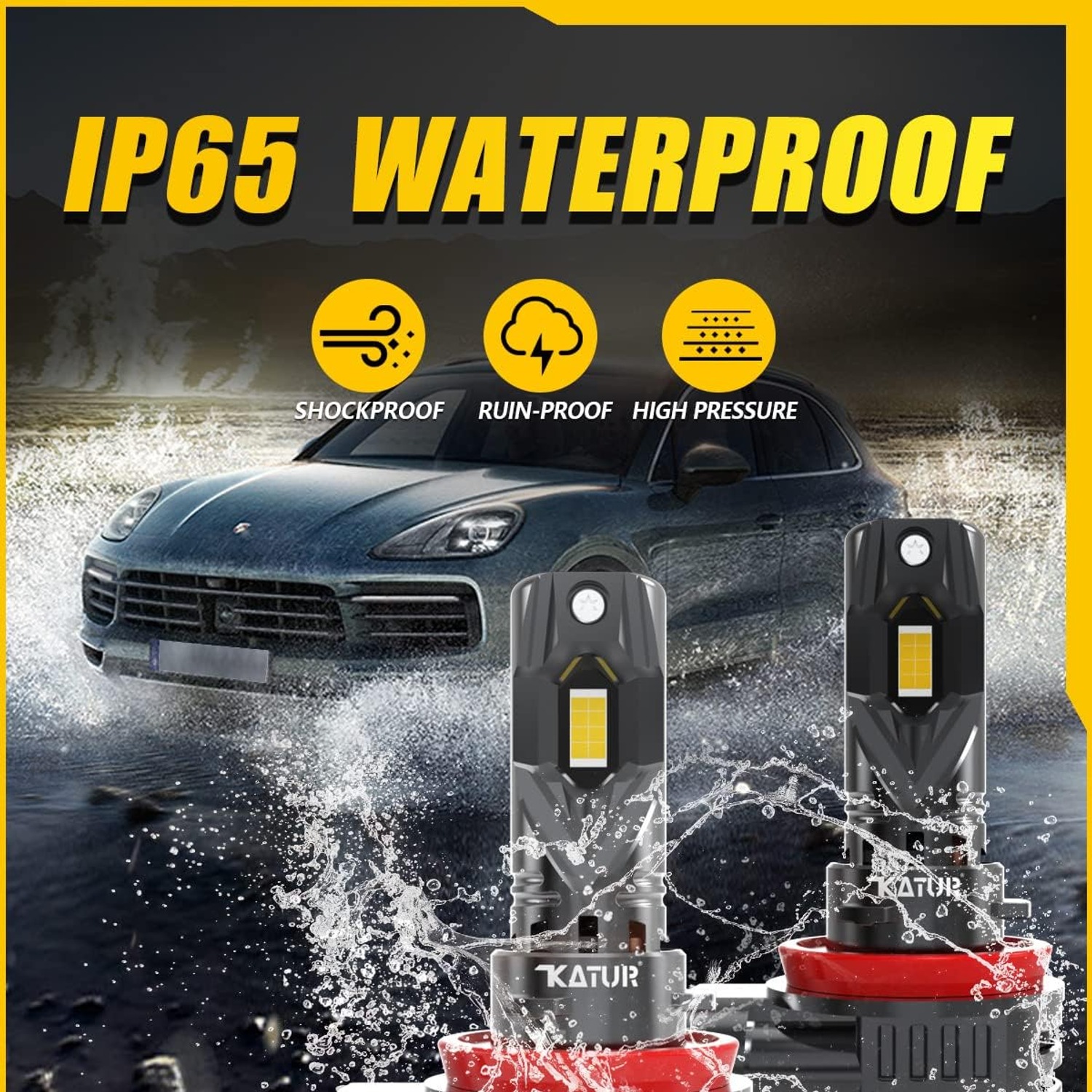
Next, look at the space. Reach behind the housing and see how much depth is available. Check whether the dust cap is shallow or deep, because a conversion bulb often sits differently than the halogen it replaces. Some builders use a deeper cap when clearance is tight. If the cap will not close, dust and moisture get in, and that is a problem you do not want.
Finally, decide on the decoder question. If your vehicle has a history of dash warnings after bulb changes, plan for a CANbus decoder now rather than later.
Fitting them without drama
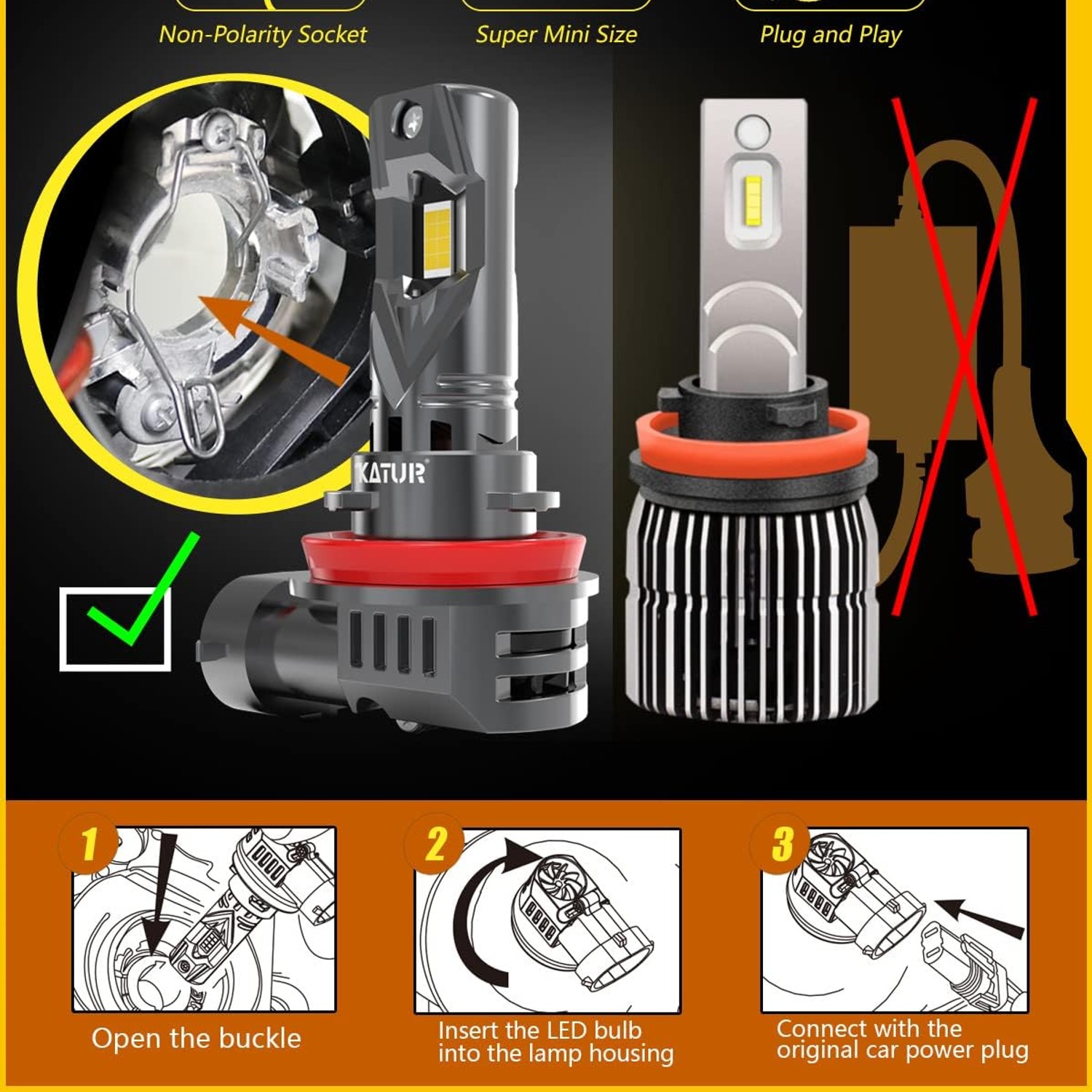
Work with the ignition off and let everything cool. Open the back of the housing, release the retaining clip, and pull the old bulb straight out rather than twisting it against the tabs. Line up the flange on the new bulb with the notches in the socket and seat it fully before you close the clip.
Handle the new bulb by its base. Avoid touching the LED chips or pressing on the heat sink fins. Keep the contacts clean and dry, since grease on a connector causes more trouble than most people expect.
Do both sides at once. You have two bulbs in the box, and a matched pair looks right in a way that a mixed pair never does.
Looking after them
Care here is simple. Let the bulbs cool before touching them after use. Wipe dust from the outside of the housing with a soft dry cloth. Keep moisture and grease away from the contacts, and make sure the dust cap seals properly every time you close it up.
For a spare bulb, keep it in its packaging in a dry place, away from anything heavy that could sit on the heat sink. Loose in a toolbox is how contacts get scratched.
The short version
This is a pair of H11 LED bulbs, 12 volt, 6500 Kelvin, fanless, with no decoder included. They are sold for off-road, show and private property use, and they are not for use on public roads in headlights designed for halogen bulbs.
If your project fits that description and your housing takes an H11 bulb, this is a straightforward set to work with. Check your fitting, check your clearance, plan for a decoder if your vehicle is fussy, and fit both sides in one go. If you are unsure about any of those steps, ask us before you order rather than after.