
The complete guide
Buying HB4 9006 Halogen Headlight Bulbs, A Practical Guide
The problem nobody notices until it is dark
Headlight bulbs rarely die with any warning. They fade. A halogen filament gets thinner over time and the glass slowly clouds, and because it happens over months rather than overnight, your eyes adjust along with it. Then one bulb finally gives up, you drive home with one working headlight, and when you look at the car in a reflection you realise the other side has been dim for a long time too.
That is the quiet reason headlight bulbs are sold in pairs. It is not an upsell. It is that replacing one side of a car that has done thousands of hours of night driving leaves you with a mismatched front end, one bright beam and one tired one, which looks odd and makes judging distance at night harder than it needs to be.
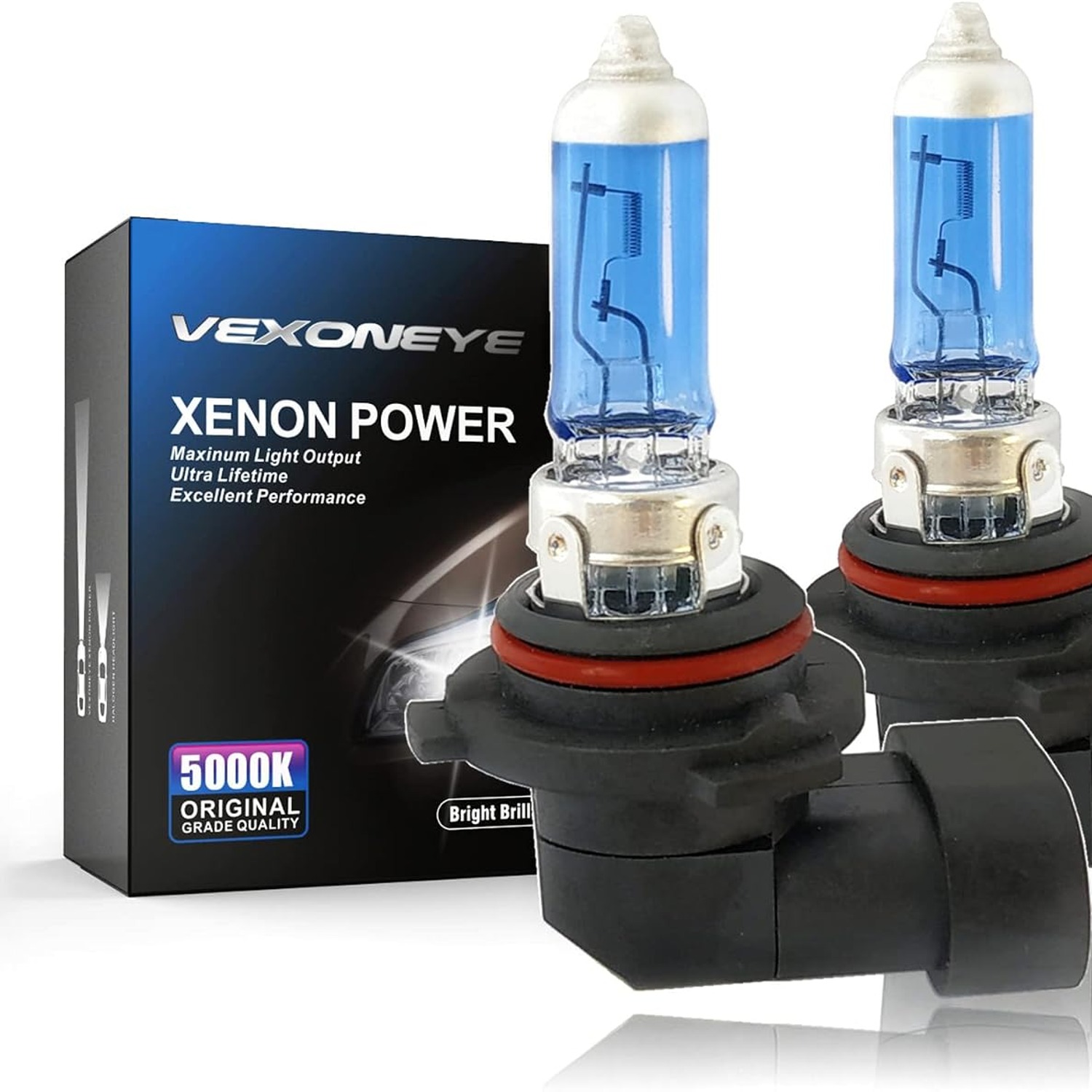
This pack is two halogen bulbs with the HB4 fitting, 55 watts each, with a colour temperature of 3800 Kelvin. That is the whole specification, and it is worth understanding what each part of it actually means before you buy.
HB4 and 9006 are the same thing
This trips people up constantly. HB4 is the fitting name, 9006 is the trade number for the same fitting, and manufacturers use whichever they feel like. If you pull your old bulb and the base is stamped 9006, this pack fits. If it says HB4, same answer.
The fitting is what determines whether a bulb physically goes into your headlight. It covers the shape of the base, the position of the locating tabs, and how the connector plugs in. HB4 is a single filament design, which means one light function per bulb. In most vehicles that function is low beam, but some use it for fog lights or driving lights instead. Your owner manual will have a bulb chart that spells out which bulb goes where.
What we cannot do is tell you this fits a specific car. We list bulbs by fitting type, not by make and model, because the same model can use different bulbs depending on the year and trim. Checking the old bulb takes two minutes and is always more reliable than a lookup table.
What 55 watts and 3800K actually tell you
Wattage is how much power the bulb draws, not how bright it is. Fifty five watts is the standard figure for the HB4 fitting, which matters because your vehicle's wiring, fuses and switches were designed around that number. Sticking to the standard draw keeps everything working the way it was meant to.
Kelvin is a colour measurement. Low numbers are warm and yellow, high numbers are cool and blue. At 3800K you get a warm white, very close to what most factory halogen headlights produce. There is a long running argument about whether warm or cool light is better at night, and the honest answer is that it depends on conditions and on your eyes. Warm white tends to hold up well in rain, fog and falling snow, because cooler light scatters more off the water in the air. It also looks like a normal headlight rather than an aftermarket one, which some drivers prefer.
If you are specifically shopping for a warm white halogen bulb rather than something blue tinted, 3800K is the number to look for.
Who this suits
This is a straightforward replacement for anyone whose vehicle already runs HB4 halogen bulbs and who wants to put the lights back to a clean, even condition. It suits the owner who has had a bulb go out, the one doing a pre winter check before the dark months, and the one who likes to keep a spare set in the boot.
It is not a conversion. It will not turn a halogen setup into LED or HID, and it is not compatible with ballasts or drivers. If your car came with projector LED units from the factory, this product is not for you.
It also suits people who do their own small jobs on the car. Changing a halogen bulb is one of the last genuinely easy maintenance tasks left on a modern vehicle, and doing it yourself saves a workshop visit for what is often less than fifteen minutes of work.
How to choose, in order
Start with the fitting. Pull the old bulb or read the manual. If it says HB4 or 9006, you are in the right place. If it says H11, H7, HB3 or anything else, you need a different bulb and we would rather you find that out now than after the parcel arrives.
Then decide on colour. These are 3800K warm white. If you want that factory look, good. If you had your heart set on something that reads much whiter or blue, this is not that bulb.
Then think about quantity. One pack covers both headlights. Two packs covers both headlights plus a full spare set, which is what a lot of people who drive long distances at night choose to do. A spare headlight bulb kit in the car is cheap insurance against being stuck somewhere dark.
Last, check what else needs doing while the housing is open. If the dust cover seal is cracked or the housing has moisture in it, a new bulb will not fix that, and moisture is one of the most common reasons bulbs fail early.
Fitting them without ruining them
There is one rule that matters more than all the others. Do not touch the glass with bare fingers. The oil from your skin stays on the quartz, and when the bulb gets hot that spot heats unevenly. Hold the bulb by its metal base or the plastic collar at the bottom. If you do slip and touch the glass, wipe it down with isopropyl alcohol on a lint free cloth and let it dry fully before fitting.
Beyond that, the process is usually simple. Switch the lights off and let everything cool, because halogen bulbs get very hot in use and stay hot for a while after. Open the bonnet, find the back of the headlight, remove the dust cover, unplug the connector, release the clip or twist the bulb free, and pull it out. The new bulb goes in the same way in reverse. Make sure the locating tabs line up so it seats properly, and put the dust cover back on properly so the housing stays sealed.
Access is the variable part. Some vehicles give you plenty of room. Others need the airbox, a battery, a trim panel or a wheel arch liner moved out of the way first. If you cannot see what you are doing, it is worth looking up the access procedure for your specific car before you start.
Once both bulbs are in, turn the lights on and check both sides from the front. If one looks noticeably lower or higher than the other, point the car at a wall and check the aim.
Keeping them alive
Halogen bulbs do not need maintenance, but a few habits help. Keep the housing sealed and dry. Replace a cracked dust cover rather than taping it. If one side keeps blowing bulbs and the other never does, something else is going on, usually water in the housing or a corroded connector, and swapping in more bulbs will not fix it.
Store spares in their packaging, somewhere they will not rattle loose. Vibration is hard on a filament even when the bulb is switched off.
The short version
HB4 and 9006 are the same fitting, and this pack contains two of them. Fifty five watts each, 3800 Kelvin, a warm white light close to standard factory colour. Both bulbs in one box so you can change the pair at once and keep the front of the car looking even.
Check the marking on your old bulb before you order. Hold the new ones by the base, not the glass. Let the old one cool before you pull it. That is genuinely the whole job, and if you are unsure at any point, send us a photo of the old bulb and we will tell you whether this is the right pack.