
The complete guide
The Practical Guide to Buying HB3 9005 Halogen Headlight Bulbs
The problem these bulbs solve
A headlight bulb never fails at a convenient time. It goes on a wet drive home, or you only notice it when someone flashes you at a junction. Suddenly one side of the road ahead is a lot darker than the other, and you are driving a car that is half lit.
The fix is usually a small, cheap part and twenty minutes of your time. The hard part for most people is not the job itself. It is working out which bulb the car actually takes, because headlight bulbs come in a long list of fittings that look vaguely similar and are absolutely not interchangeable.
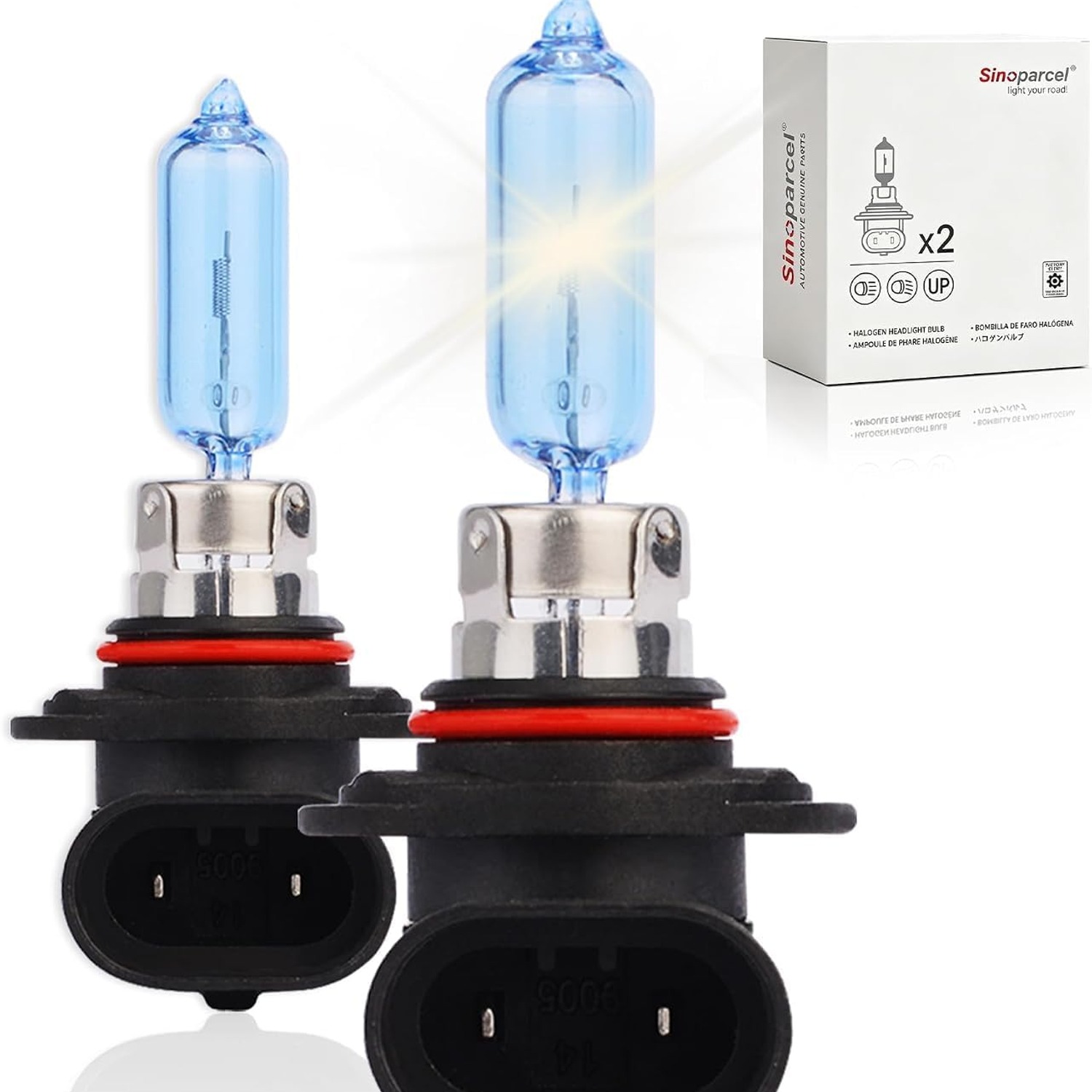
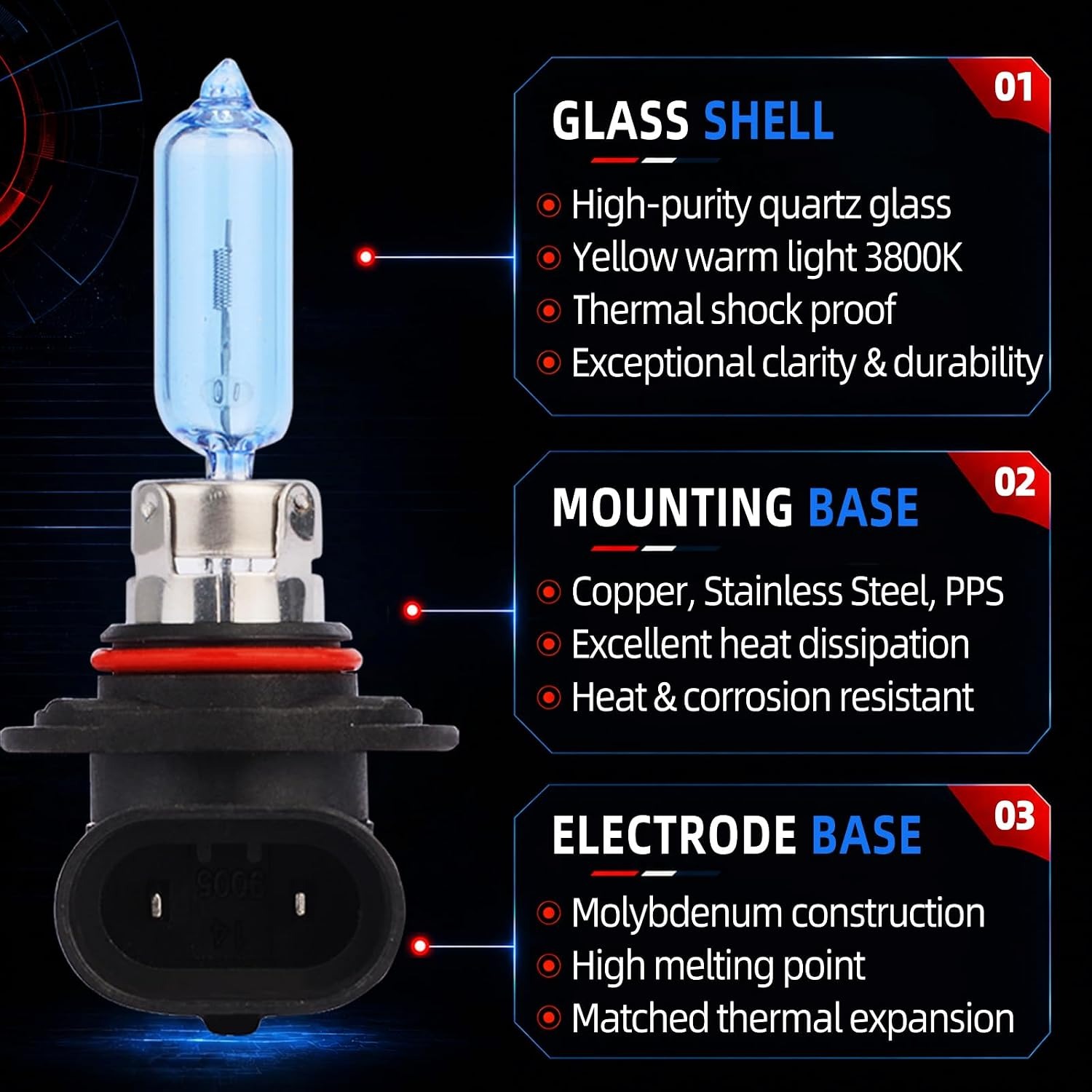
This pack is for one of those fittings. HB3, also printed as 9005, is a common halogen type. Two bulbs come in the box, each rated at 65 watts with a stated light colour of 3800 Kelvin. If your old bulb carries the HB3 or 9005 code, these are built to replace it.
How a halogen headlight bulb works
A halogen bulb is a filament inside a small, sealed glass capsule filled with a halogen gas. Current heats the filament until it glows, and the gas helps the filament metal stay where it belongs instead of blackening the inside of the glass. That is why these capsules are so small compared with an old household bulb.
The reflector or lens behind the bulb is doing just as much work as the bulb. It takes the light coming off that tiny filament and shapes it into the pattern you see on the road. This matters for two reasons. First, the bulb has to sit in exactly the right position, which is why the base has a locating tab or clip. Second, a scratched, hazy or yellowed lens will soften the beam no matter how new the bulb is.
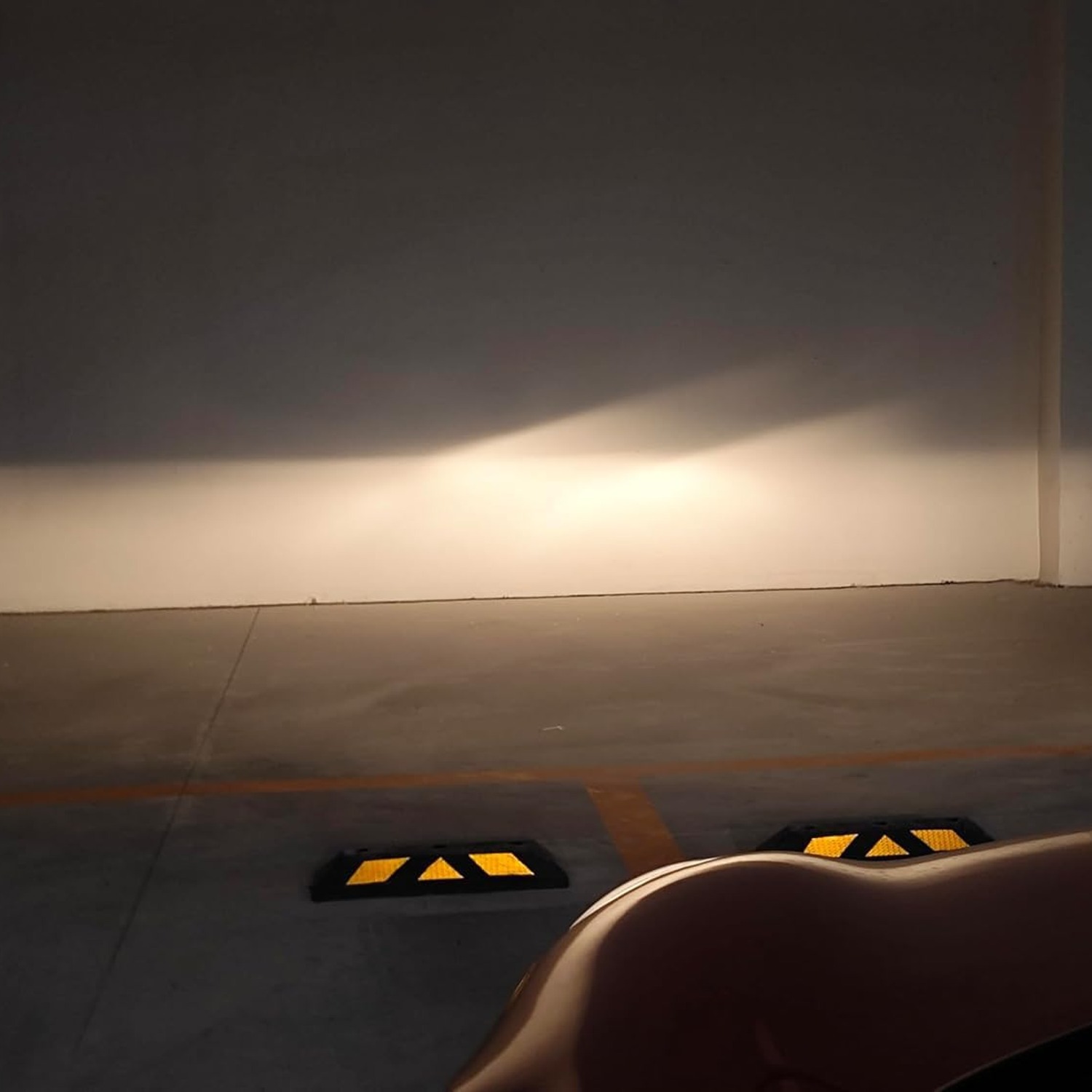
Wattage tells you how much electrical power the bulb draws. These are 65 watt bulbs, which is a common figure for an HB3. Colour temperature in Kelvin describes the tint of the light, not the amount. At 3800 Kelvin you get a warm white light, the sort of tone people recognise from a standard halogen headlight rather than the cooler, bluer tint some bulbs are sold with.
Who these bulbs suit
The obvious buyer is someone whose HB3 bulb has just blown. You have the old bulb in your hand, you can read the code, and you want a replacement that goes back in the same way.
The second buyer is the person who plans ahead. Keeping a spare pair in the glove box is one of the cheapest bits of insurance in car ownership. A failed bulb on a long drive becomes a five minute stop in a service station car park instead of a problem. People who drive at night for work, or who do a lot of rural driving where there is no street lighting to lean on, tend to carry spares as a matter of course.
The third buyer is restoring the look of an older car. If the headlights have been running for years, both bulbs are past their best, and a fresh matched pair brings the front of the car back to looking right. A good set of spare headlight bulbs is one of the more satisfying small jobs you can tick off on a Saturday morning.
Choosing the right fitting
This is the step that matters more than any other, so take two minutes on it. There are three ways to confirm your fitting, and the best one is to read the old bulb.
Pull the bulb out and look at the base. The code is moulded or printed there, usually alongside a voltage and a wattage. If it says HB3 or 9005, these bulbs are the matching fitting. If it says something else, stop and check before ordering, because a bulb with a different base will not seat correctly.
The second method is the owner manual. It is reliable, as long as nobody has changed the headlight units before you owned the vehicle.
The third option is to ask. Send us the code you can read, or a photo of the base, and we will tell you whether this pack matches. We list fitment by fitting type only, so we will never tell you a bulb fits a named vehicle. The fitting code is the fact that actually decides it.
One more note on approvals. We do not claim any approval marking for this bulb. If you need a bulb that carries a particular mark, look at the markings on your old bulb and contact us first so we can tell you what the stock we hold is marked with. It is better to ask than to assume.
Fitting them without the fuss
Start cold. Halogen bulbs run very hot in use, so switch the lights off and let the old bulb sit for a few minutes before you touch it.
Open the bonnet and find the back of the headlight unit. On some cars there is a round cover to twist off. On others you may have to move an air intake, a washer bottle or a battery cover for access. Your manual will show the route.
Unplug the connector from the bulb, then release whatever holds the bulb in place. HB3 bulbs typically twist a quarter turn or sit under a wire clip. Pull the old bulb straight out and set it somewhere safe, since the glass can still be warm.
Now the important bit. Take the new bulb out of its packaging by the base or the plastic collar, never the clear glass. Finger oils leave a residue that gets baked onto hot glass and can shorten the bulb's life. If you do touch the glass, wipe it with rubbing alcohol on a lint free cloth and let it dry before fitting. Gloves make this easy.
Seat the new bulb so the tab lines up with its slot, lock it in, push the connector fully home, and test the lamp before you close everything up. Then repeat on the other side with the second bulb. Doing both sides at once keeps the colour and output looking even, and saves getting the tools back out in a month. For anyone after the best matched pair headlight bulbs approach, that is the whole idea behind buying two.
Caring for them once fitted
Bulbs need almost no maintenance, but a few habits help. Keep the clear glass clean before fitting and leave it alone afterwards. Make sure the connector is dry and corrosion free, since a poor connection makes a bulb flicker and can cook the plug.
Pay attention to the headlight lens too. Road grime and UV haze cut light output noticeably on older cars, and a wash or a lens restoration can make more difference than people expect. A new bulb behind a cloudy lens is only half a fix.
If you are storing a spare pair, leave it in the packaging in a dry place where it will not rattle against metal. The box protects the glass and keeps finger marks off it until the day you need it.
The short version
Confirm your fitting from the code on the old bulb or the owner manual. If it reads HB3 or 9005, this pack of two 65 watt halogen bulbs at 3800 Kelvin is the matching type. Handle them by the base, never the glass. Let the old bulb cool before you touch it, since these get very hot. Fit both sides while you have the car open so the light looks even, or keep the second bulb as a spare.
If you are not sure which code you are looking at, message us first. Checking a fitting takes a minute, and it saves a return.